

- Category: Latest News
- Written by Rick Ellis
-

Serial Killer Mentioned As Possible 'Killing Fields' Murder Suspect Dies In Prison
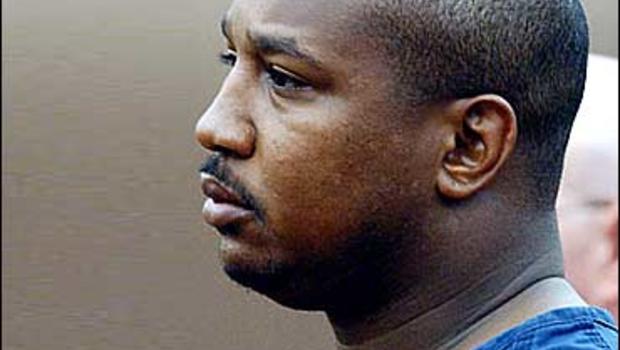
A Louisiana state corrections official released a statement on Thursday revealing that convicted murderer Derrick Todd Lee died that morning of undisclosed causes. Lee had been sitting on death row at the Louisiana State Penitentiary at Angola, and was transported to a undisclosed location on Saturday to receive undisclosed medical care.
According to the Department of Public Safety and Corrections spokeswoman Pam Laborde, an autopsy will be performed and Lee's remains will be under review by a forensics pathologist.
Authorities believe Lee was responsible for a string of murders in the Baton Rouge area between 1998 and 2003. Those murders were attributed to local law enforcement to someone they called the "Baton Rouge Serial Killer."
Lee, a married father of two, had worked in construction and as a truck driver. Over the years he had a series of encounters with the law, including a two-year stint in prison from 1995-1998. In that case, a Zachary, La. homeowner came home to find Lee in the bedroom. He also spent several months in jail in 2000 after being convicted of aggravated battery in a case where he was accused of stomping and assaulting a girlfriend in a West Feliciana Parish bar.
Lee had been questioned by police about several of the murders but was originally ignored as a suspect because some eyewitness reports suggested the killer was white. He was later linked to the murders following the July 9, 2002 assault of Diane Alexander in her St. Martin Parish home. Lee was accused of beating and attempting to rape her. He was chased off when Alexander's son arrived home and a police sketch of her attacker led to Lee. After his arrest, DNA evidence connected him to seven murders in Louisiana between 1998 and 2003.
Some local authorities also suspect he might be responsible for at least a dozen other unsolved murders in that same time frame. But some of those cases are complicated by the fact that another serial killer, Sean Vincent Gillis, was operating in the Baton Rouge area during the same time as Lee.
Lee was sentenced to death in October 2004 after being convicted of the first-degree murder of Charlotte Murray Pace, a 22-year-old LSU grad student. He was then additionally sentenced to life in prison after being convicted of the second-degree murder of 21-year-old Geralyn Barr DeSoto. Local press accounts later reported that jurors had voted 11-1 to convict him of first-degree murder, which can bring a death sentence. But because the vote was not unanimous, he was convicted of the lesser charge.
Lawyers representing Lee had argued that he was mentally ill and brain-damaged and therefore should not be executed. During psychiatric evaluations for his first trial, he scored an average of 65 on various standardized IQ tests. A score below 69 is considered to be the threshold for what can be considered mental retardation. Lee was, however, deemed fit to stand trial and his murder conviction and death sentence was upheld by the state Supreme Court in January 2008.
While on death row Lee's case was appealed by lawyers seeking to overturn his conviction and the resulting death sentence in the 2002 death of Charlotte Murray Pace. Lee’s arguments included a claim that the district court provided the defense too little funding for adequate DNA testing of evidence. The Louisiana State Supreme Court rejected the appeal in September, 2015.
"Given the compelling evidence that Lee committed five brutal murders marked by exceptional violence and unsuccessfully attempted another, he cannot show that counsel's failure to present additional evidence that he may suffer from other mental disorders, whether or not related to his troubled upbringing, deprived him of a fair sentencing hearing or resulted in an unreliable recommendation of death," Justice Scott J. Crichton wrote in a concurring opinion.
Lee's exploits had been the focus of several television shows over the years. In September 2002, AMERICA'S MOST WANTED devoted a segment to the hunt for south Louisiana's serial killer, showing re-enactments of the first three murders. There was a follow-up segment in January 2003, focusing on the November 2002 slaying of Trineisha Colomb, the fourth victim linked to Lee.
Before Lee's arrest, there had been a persistent rumor locally that the killer had gained access to the victim's homes by using a recording of a baby crying. The rumor was widespread enough that it forced the task force investigating the murders to issue this statement:
Misconception - The serial killer is gaining entry by using a tape recording of a crying baby. When the victims opened the door to investigate the crying, he was able to force his way into the home.
Fact - Although the method of entry has not been determined, we have never had any indication that a tape recording was used.
Those rumors resurfaced following a October, 2007 episode of the CBS drama CRIMINAL MINDS, which included a line stating that "Derek Todd Lee used a tape recording of a crying baby to lure women out of their home." Local police once again issued a statement denying there was any evidence that a recording had been used in any of the murders.
Lee was also mentioned as a possible suspect during several episodes of the true-crime series KILLING FIELDS, currently airing Tuesday nights on Discovery. That series has focused on the unsolved murder of Eugenie Boisfontane, a 34-year-old grad student found in Bayou Manchac in August 1997. Boisfontaine, who resided at 2009 Stanford Ave. at the time of her death, lived in close proximity to two victims who have been linked through DNA to Lee, though each of the murders took place in different years.
In late 2005, DNA from a pair of shredded black panties found on Boisfontaine’s body were analyzed by ReliaGene Technologies, Inc., and their preliminary findings were that the DNA did not match that of Derrick Todd Lee.
A synopsis of the Boisfontaine case and Lee's possible connection to it was outlined in the 2009 book by Susan D. Mustafa entitled "Blood Bath." In the book, originally entitled "I've Been Watching You: The South Louisiana Serial Killer" was written in cooperation with local prosecutor Tony Clayton. The book veers between non-fiction and fiction in some of its recountings of the murders, but it does include an interesting complaint from Eugenie's sister, Susan Edwards.
Edwards complained that the scene where Boisfontaine's body was found was mishandled by the local coroner, perhaps leading to the loss of DNA that might have linked Lee to the murder:
"It was really awful. I begged police to do something about DNA, to stake off the area, anything. I thought they might be able to find who did this by the DNA that was found. Joe Freeman, the coroner in Iberville Parish, told me they didn’t even have the money to buy body bags. Joe Freeman was a nightmare. He was so rude, and nothing as ever done."
Several investigators have put together a circumstantial case for Lee being her killer. The details of her abduction and death match several details of other murder cases, including Boisfontaine's likely disappearance who walking around a lake near LSU. At the time of her death, Lee was working as a driver for Louisiana Ready Mix and traveled near the area where Boisfontaine's body was found. He also did not show up for work on June 13, the day she disappeared. Several men who were building a fence near her home during the week she disappeared reporting seeing a man in her back yard one day when they returned from lunch. Several of those men gave descriptions that matched Lee.
KILLING FIELDS continues to air on Discovery and as of yet, the show hasn't revealed any final conclusion about Lee's possible involvement in Boisfontaine's death. But the episodes that have aired so far have focused on another possible suspect, a boyfriend known only as "Robert."